Archive

July Fourth Observed: Godly Meditations from America’s Founding Fathers

Godly Meditations from America’s Founding Fathers John Adams: “The law given from Sinai was a civil and municipal code as well as a moral and religious code. These are laws essential to the existence of men in society and most of which have been enacted by every Nation which ever professed any code of laws. Vain indeed would be the search among the writings of secular history to find so broad, so complete and so
My Rage and Spirituality from Below (Part IV)

By contrast, spirituality from above reacts to the rage that boils up in us by repressing or crushing it: “Rage is not supposed to happen. As a Christian I’ve got to be friendly and balanced at all times. So I have to control my rage.” Spirituality from below would mean questioning my rage, questioning what God wants to tell me with it. Perhaps my rage is pointing to some deep injury. Perhaps in my rage

Giving Birth to God

Many of the early teachers of the Christian Church believed in an ontological, metaphysical, objective union between humanity and God, which alone would allow Jesus to take us “back with him” into the life of the Trinity (John 17:23-24, 14:3, 12:26). This was how many in the Early Church understood and experienced “participation.” It proclaimed our core identity as the beginning point (Ephesians 1:3-12), not external practices of any type. We had thought our form

Remain in Me

Remain in me, as I remain in you. Just as a branch cannot bear fruit on its own unless it remains on the vine, so neither can you unless you remain in me. I am the vine; you are the branches. –John 15:4-5 The motivation, meaning, and inherent energy of any action come from its ultimate source, which is a person’s foundational and core vantage point. What is his or her real and honest motivation?

God and Caesar (Part VI): Towards a Creative Secularism

In the inescapably pluralist life of the city today, Christians must strive for a creative secularism. An open civilization, free from ideocracy, must not be a spiritual desert abandoned to the instincts by the blind forces of production. Kirkegaard thought it necessary ‘to go more deeply into man as he actually exists’ before daring to speak to him of God. More than a thousand years before, the hardiest of ascetics, St John Climacus, remarked that

A July Fourth Meditation

John Adams: “The law given from Sinai was a civil and municipal code as well as a moral and religious code. These are laws essential to the existence of men in society and most of which have been enacted by every Nation which ever professed any code of laws. Vain indeed would be the search among the writings of secular history to find so broad, so complete and so solid a basis of morality as

Christmas Advent: The Sixth Day

GOD, THE SUPREME AUTHORITY, has spoken since the beginning of Creation, and continues to speak, in thunder and flood, in light and darkness, in seasons of rain or drought, in war and peace. We are bound to listen to his voice, for there is no other. And because he sent us his Word, and there is no other, our ears must be open to hear it. When God speaks the entire world must answer. Some

Vision

Abba Zacharias had a vision. He told his spiritual Father, Carion the ascetic, about it. Exasperated, Carion beat him and told him the vision came from demons. Zacharias went to Abba Poemen to tell him about it. Seeing his sincerity, Abba Poemen sent him on to a monk who was a mystic. This monk knew all about the vision before Zacharias even told him and said it was indeed from God. Then the mystic instructed

The Commandment to Love

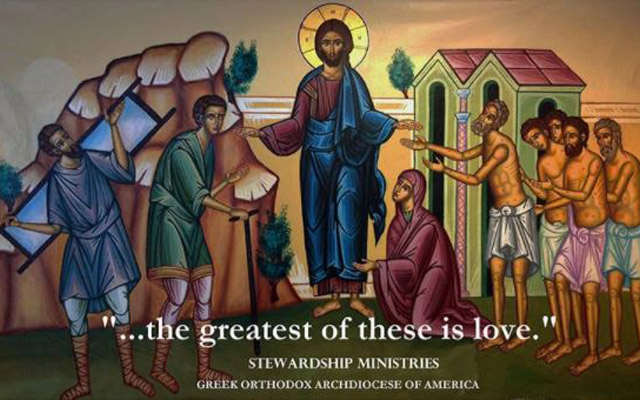
Jesus commanded us to love, so we know it is not just a feeling, since you cannot command feelings. Love is a decision. Jesus did not say: When you get healed, love;When you grow up, love; when you feel loving, love;When you get it together and have dealt with all your mother/father/husband/children wounds, then you are able to love. No, the commandment for all of us is to LOVE now. I think we know the

Father Maximos on Knowing God through Experience, Logic, and Nature

There was a pause before the next question. “Yes, Teresa,” Fr. Maximos said, giving the floor to a woman in her thirties who had raised her hand. I was always impressed with his capacity to remember people’s names. “Would you say that we know God through our experience rather than through our logic?” “I believe we know God through both our experience and our logic. Human beings are also rational creatures.” “But I thought,” Teresa