Archive

Sunday of The Parable of the Publican and Pharisee

The Sunday of the Publican and the Pharisee is the first Sunday of a three-week period prior to the commencement of Great Lent. It marks the beginning of a time of preparation for the spiritual journey of Lent, a time for Orthodox Christians to draw closer to God through worship, prayer, fasting, and acts of charity. It is also on this day that the Triodion is introduced, a liturgical book that contains the services from
Feast Day of Saint Gregory the Theologian

On January 25 the Greek Orthodox Church celebrates the Feast Day of Saint Gregory the Theologian and Archbishop of Constantinople, who was also one of the Three Holy Hierarchs, along with Saint Basil the Great and Saint John Chrysostom. Saint Gregory the Theologian, Archbishop of Constantinople, a great Father and teacher of the Church, was born into a Christian family of eminent lineage in the year 329, at Arianzos (not far from the city of Cappadocian Nazianzos). His father, also

Feast of the Holy Apostles Bartholomew and Barnabas

Apostle Bartholomew of the Twelve The Holy Apostle Bartholomew was born at Cana of Galilee and was one of the Twelve Apostles of Christ. After the Descent of the Holy Spirit on the Day of Pentecost, it fell by lot to the holy Apostles Bartholomew and Philip (November 14) to preach the Gospel in Syria and Asia Minor. In their preaching they wandered through various cities, and then met up again. Accompanying the holy Apostle

Sunday of The Fathers of the First Ecumenical Council

Introduction The seventh Sunday after the Feast of Holy Pascha is observed by the Orthodox Church as the Sunday of the Fathers of the First Ecumenical Council. This day commemorates the 318 God-bearing Fathers who gathered in Nicaea in 325 at the request of the Emperor, Saint Constantine the Great, to address the heresy of Arianism together with other issues that concerned the unity of the Church. Commemoration of The Great and Holy Feast of

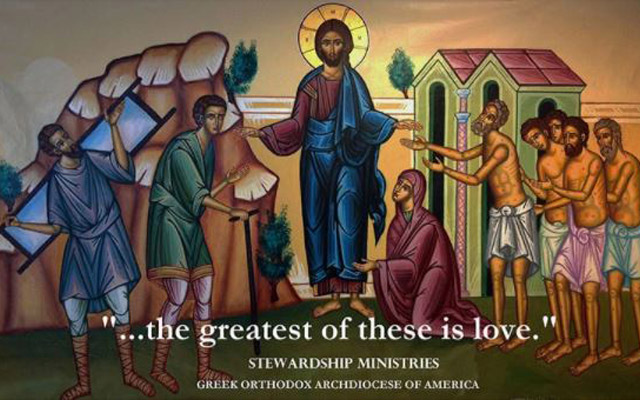
Sunday of the Paralytic

ΧΡΙΣΤΟΣ ΑΝΕΣΤΗ! CHRIST IS RISEN! Excerpt from a Homily by Saint John Chrysostom If someone’s really knowledgeable about gold mines, they wouldn’t be able to bear not examining the smallest vein for the wealth it contained. So, in the Scriptures, it’s impossible without loss to pass over the merest jot. We must investigate everything since everything’s uttered by the Holy Spirit, and there’s nothing written in them to distract us. Consider, for instance, what the

From Darkness to Light

~By Archimandrite Varnavas Lambropoulos On the eve of our entry into Great Lent, everything in church speaks to us of repentance. The wonderful hymns ‘robe’ the message of repentance in a poetic manner; the Gospel reading gives us the keys to open the gates of repentance; and the Epistle reminds us of one of Saint Paul’s most pressing admonitions: to call us to repentance. In essence the leading apostle repeats, in his own, graphic manner,

Five Ways to Repent

By Elder Moses the Athonite † Saint John Chrysostom shows us five practical ways to repent. He says: The first way is to condemn yourself for your sins. The Lord esteems this action greatly. If, of your own volition, you condemn your sins, you’re less likely to repeat them. No fault will be found at the heavenly tribunal over the timely awakening of your conscience through self-criticism. The second valuable path of repentance is not

Feast of the Holy, Glorious, and All-Praiseworthy Chiefs of the Apostles, Peter and Paul. Synaxis of the Holy, Glorious and All-Praised Twelve Apostles

June 29 THE HOLY APOSTLES PETER AND PAUL The divinely-blessed Peter was from Bethsaida of Galilee. He was the son of Jonas and the brother of Andrew the First-called. He was a fisherman by trade, unlearned and poor, and was called Simon; later he was renamed Peter by the Lord Jesus Christ Himself, Who looked at him and said, “Thou art Simon the son of Jonas; thou shalt be called Cephas (which is by interpretation, Peter)” (John 1:42). On being raised by the Lord to the dignity of an Apostle and becoming

ΧΡΙΣΤΟΣ ΑΝΕΣΤΗ! CHRIST IS RISEN! The Third Tuesday of Pascha: Saints Constantine & Helen, Equal-to-the-Apostles

This great and renowned sovereign of the Christians was the son of Constantius Chlorus (the ruler of the westernmost parts of the Roman empire), and of the blessed Helen. He was born in 272, in (according to some authorities) Naissus of Dardania, a city on the Hellespont. In 306, when his father died, he was proclaimed successor to his throne. In 312, on learning that Maxentius and Maximinus had joined forces against him, he marched

ΧΡΙΣΤΟΣ ΑΝΕΣΤΗ! CHRIST IS RISEN! Bright Wednesday: I Await the Resurrection of the Dead (part 1)

Published by Pemptousia Partnership on May 7, 2021 Holy Monastery of St John the Baptist, Kareas Attikis It’s the event that each and every one of us can be absolutely sure of: sooner or later death will come to us. Yet, for most people, the end of life remains greatly undesirable and is to be firmly resisted. This is because, during the course of our life on this earth, we haven’t been nourished on the expectation of ‘the