Archive

WHAT IS THE PIVOT POINT OF CHRISTIAN WORSHIP? (Part I)

          We all find great joy in the coming of Christmas and, strangely, many exhibit even greater joy with the coming of the secular new year.  Increasingly more and more the meaning of Christmas is becoming similarly secularized which is one very good reason for us to abandon that name and speak of it as the Nativity of Jesus Christ.  We are also forgetful of the fact that the period of the Nativity is one
Christmas Advent: The Thirty-Sixth Day

CHRISTMAS DAY IS THE FEAST OF THE INCARNATION, the celebration of God with us. That which we have longed for has entered our human experience. In Christmas services, we hear the pronouncement of the angel: “I bring you good news of great joy that will be for all the people. Today in the town of David a Savior has been born to you; he is Christ the Lord.” Families and churches often represent the Incarnation

Christmas Advent: The Thirty-Fourth Day

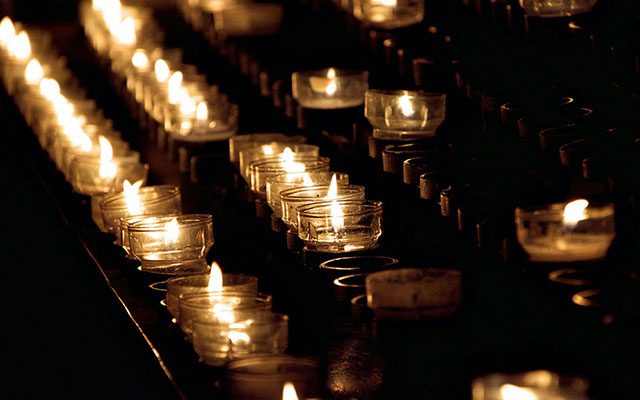
THE CRECHE CHRISTMAS EVE is the beginning of the feast of the Nativity, the celebration of God with us. All of the waiting and preparation of Advent leads us to this night. On the evening before the celebration of Christ’s birth, the church gathers for a vigil. Images of darkness and light suffuse our worship during the Christmas Eve liturgy: we are entering into the dark night of our Savior’s birth, when Light will come

Most Holy Theotokos, Save Us!

Orthodox Christians begin and end the liturgical year with celebrations dedicated to the Virgin Mary, whom we venerate as the Theotokos or “bearer of God.” On September 8, the end of the first week of the new year, we commemorate her Nativity or birth; on August 15, we close the year with the feast of her Dormition, her “falling asleep” and translation to heaven. As the hymns of these and other Marian feasts make clear,