Archive

The Fourth Thursday of Great Lent. Charity and Lent

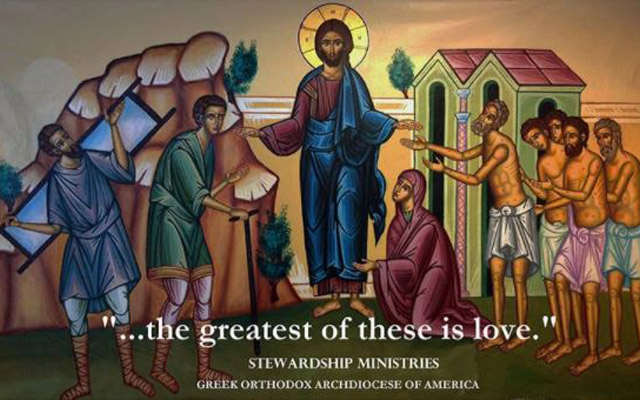
Protopresbyter Antonios Christou Dear readers, Great Lent is a time of strenuous, spiritual struggle with ourselves (less sleep, less nutrition, less ease and preoccupation with things we like doing, greater participation in the services and prayers, and so on). I don’t know, however, whether we truly realize the extent to which another fundamental aim is charity towards others. Apart from the general principle expressed in the Sermon on the Mount (‘Blessed are the merciful* for
Great Lent: An Empirical Journey into the Depths of Our Being

Elder Patapios Kavsokalyvitis, Superintendent of the Skete of the Holy Trinity, Mount Athos By fasting, we learn to say ‘No’ to our desire for food and also learn to say ‘No’ to our often self-destructive will. We also learn to say ‘Yes’ to God, which is always redemptive. We’ve begun the Triodio, this blessed period of the liturgical year, with repentance, because we’ve felt deeply, existentially, within us the need to return from our expatriation.

Sunday of Orthodoxy. The Theology of the Holy Icons

Hierodeacon Rafael Misiaoulis, Theologian On the first Sunday in Lent we celebrate the restoration of the holy icons. The Church celebrates. Orthodoxy celebrates. The human race celebrates, since all of us are made in the image (icon) of God. The Church confesses in a variety of ways. It gives a confession of faith through words, deeds and symbols. With the body, soul and spirit. And also through the holy icons. On this day we honor

The First Thursday of Great Lent. What kind of Lent?

Protopresbyter Themistoklis Mourtzanos In the minds of people today, Lent’s a period of cleansing, of nutritional detoxification, preparation for Easter, not in terms of a change of life but of diet. This time seems to them more like a memory from the past, perhaps linked to grandparents. It leads them to church on Friday evenings to hear ‘Hail, Bride Unwedded’, to take communion at the first weekend, to be given flowers at the Veneration of

The First Tuesday of Great Lent. The Struggle of Great Lent

~Elder Ephraim in Arizona † At this time, we’re entering the great spiritual arena of the blessed Great Lent. Holy and Great Lent is a time of compunction, for repentance, for tears, for a change in ourselves, for a new stage in the spiritual life. Like an affectionate mother caring for her children, us Christians, the Church has designated this time of Lent as dedicated to the struggle, in order to help its children, fight

Boundaries and Vision

Protopresbyter Themistoklis Mourtzanos ‘It’s important that we set boundaries, but they should be accompanied by a vision’ (Professor Vasilis Karapostolis). We live in a time where everything’s allowed. Parents readily excuse their children for their missteps by saying ‘They’re children, what can you do?’. Love makes our heart tolerant, sometimes excessively so. Tolerance has nothing to do with the feeling that what other people do doesn’t matter because we’ll be patient anyway. In this way,

Erstwhile Events

~Fr. Andreas Agathokleous Every person’s history comprises various phases, some pleasant, others not so. When we reflect on them, it may be that we’d rather some of them hadn’t happened and that, if we were able, we’d alter them. And yet they all contribute to our spiritual development and maturity. They’ve all given us something without which we wouldn’t be who we are and wouldn’t have our own story. It’s been said that our life

Repressed Guilt and the Phenomenon of Projection

Archimandrite Symeon Krayiopoulos † What is projection? It’s when someone projects onto others whatever it is that’s inside themselves. To put it more analytically, so that we all understand: people who’ve committed a sin and have repressed the guilt created by it, have, along with the guilt, also repressed their moral conscience; they’ve also repressed the valid law of God and replaced it with their own. It follows that everything they think, judge and decide

The Feast of Christ’s Reception as Fulfillment of the Ritual of Mosaic Law

~Theodore Rokas The recent feast, the Reception of the Lord, is the feast which is celebrated exactly forty days after that of His Nativity. The name of the feast in Greek comes from a verb meaning ‘to go out and meet or welcome someone’ [Hence the depiction of Symeon in icons as being at or outside a door. WJL]. As regards the determination of the celebration of the feast on 2 February, this was decided

How the Church Approaches Its Sinful Children

Fr. Andreas Agathokleous The notion that the Church has laws for all people and all circumstances appears not to be the case in practice. Moreover, such an idea would negate the uniqueness of the person and would amalgamate all people together, which would contravene God’s plan. When John the Baptist preached his message of rebuke, he roused the souls of the crowds who came to him to be baptized and asked him: ‘What shall we